One of the loveliest places to begin this walk is Tralee Bay Wetlands Eco & Activity Park. Reeds rustle at the water’s edge, swans drift quietly across the lake, and the setting beside the Tralee Ship Canal feels like a natural meeting point between town and countryside.
Before joining the canal path, we explored the boardwalks, stopped at the bird hides, and climbed the viewing tower for wide-open views across Tralee Bay. Starting here brought us closer to the landscape and made the walk to Blennerville feel like an adventure from the very beginning.
There’s something deeply calming about walking beside an Irish canal. The path is flat, the water barely seems to move, and birds glide past without any sense of urgency. It’s the sort of place where you naturally slow down and forget to check the time.
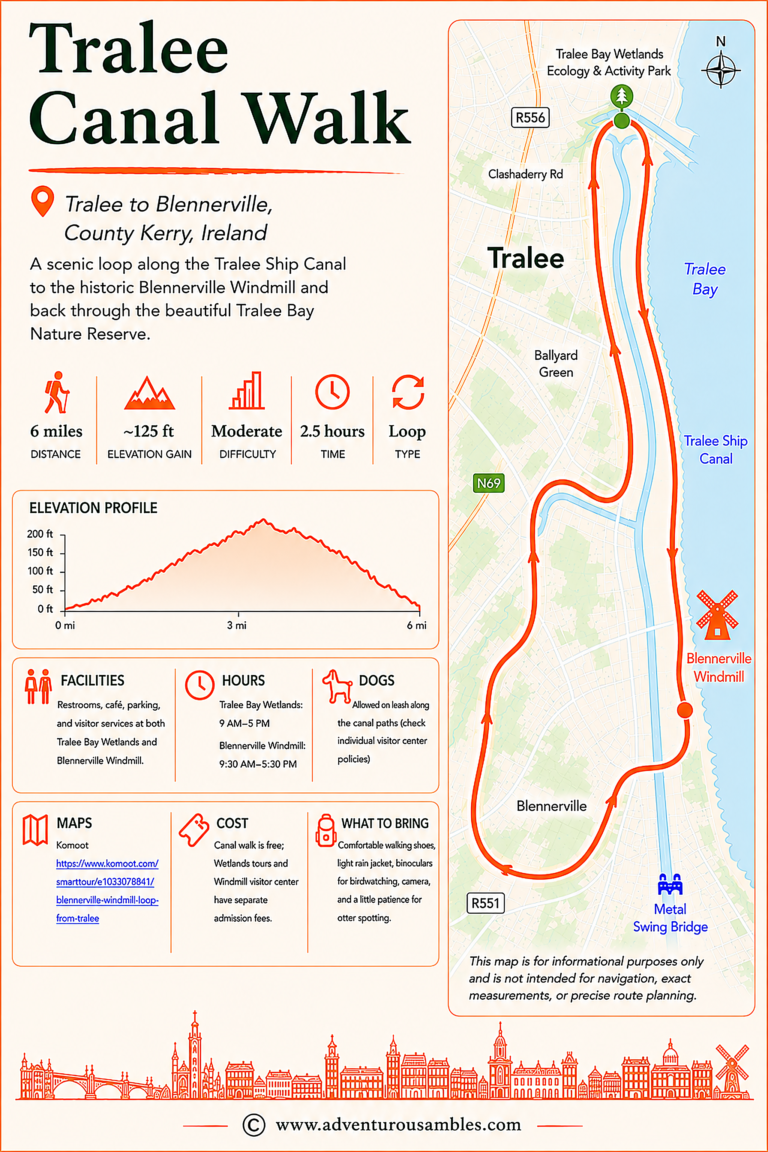
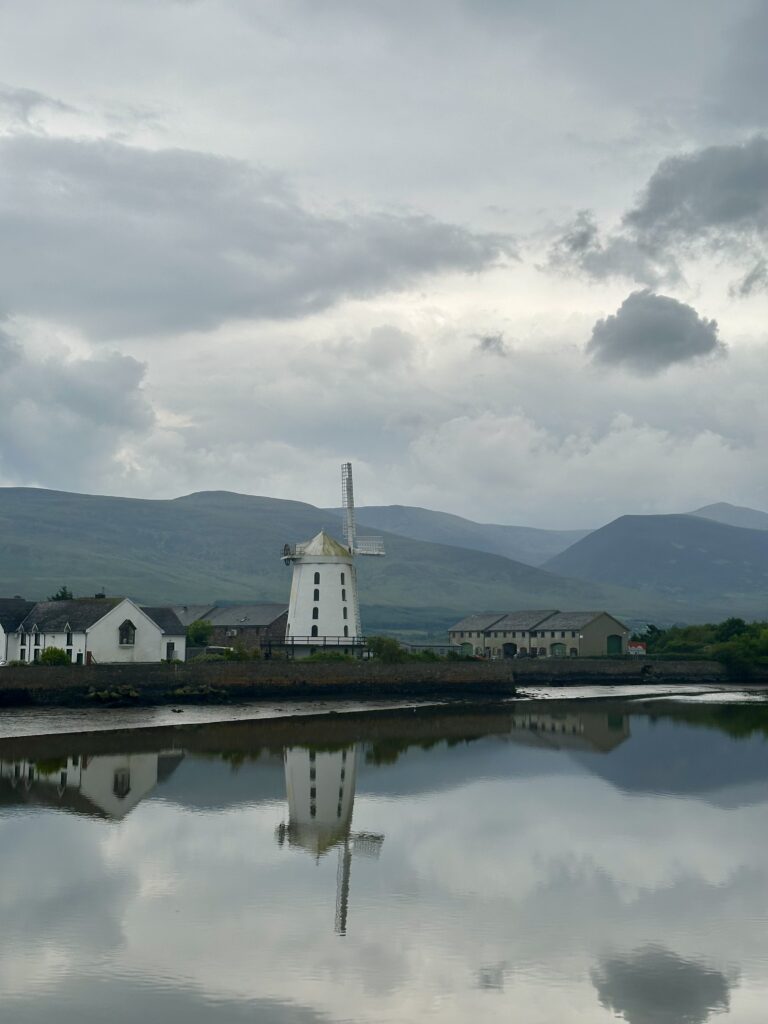
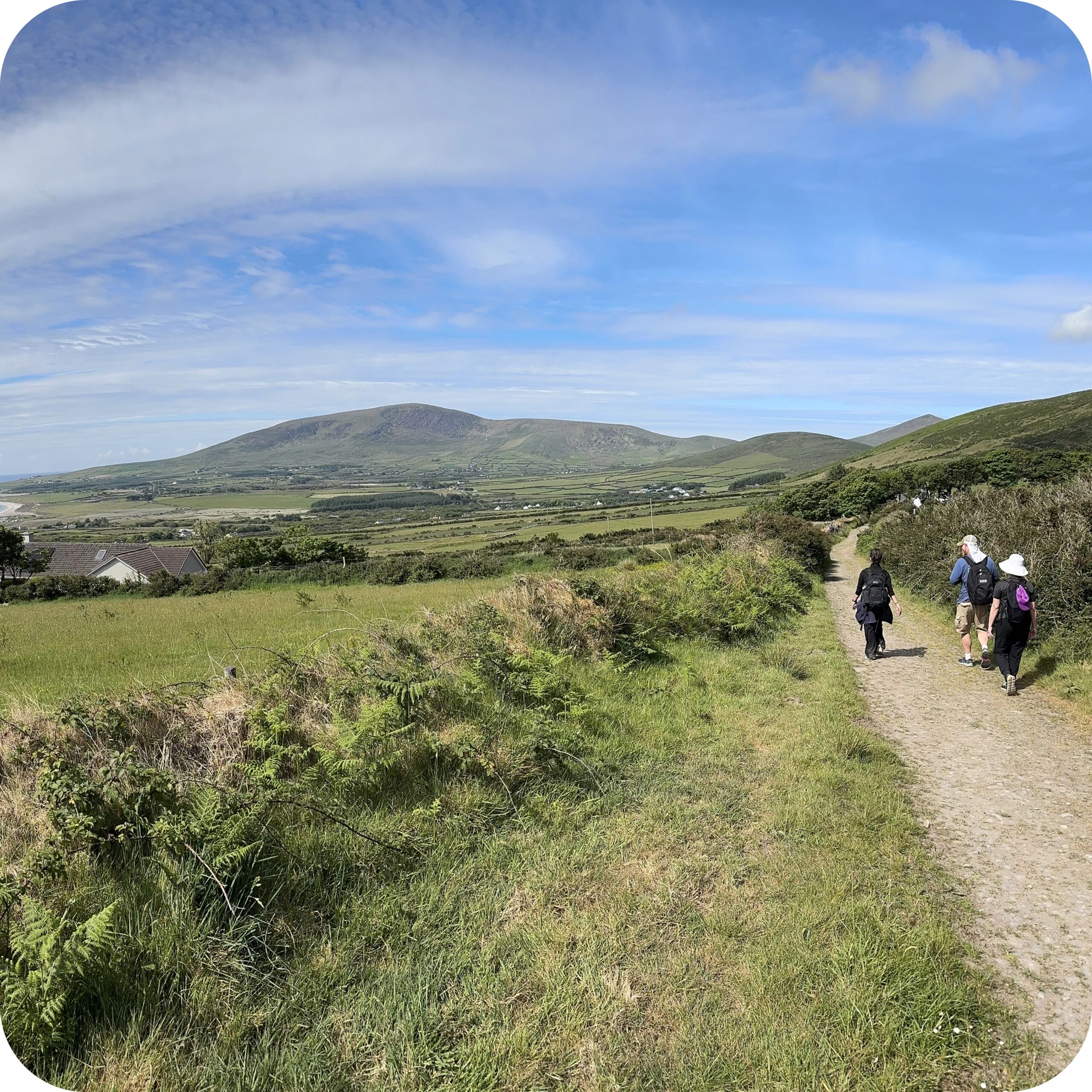
From Trá Lí—better known as Tralee, the lively county town of Kerry—we followed the Tralee Ship Canal towards the small village of Blennerville. The Slieve Mish Mountains rose in the distance, while the canal mirrored Ireland’s constantly changing skies.
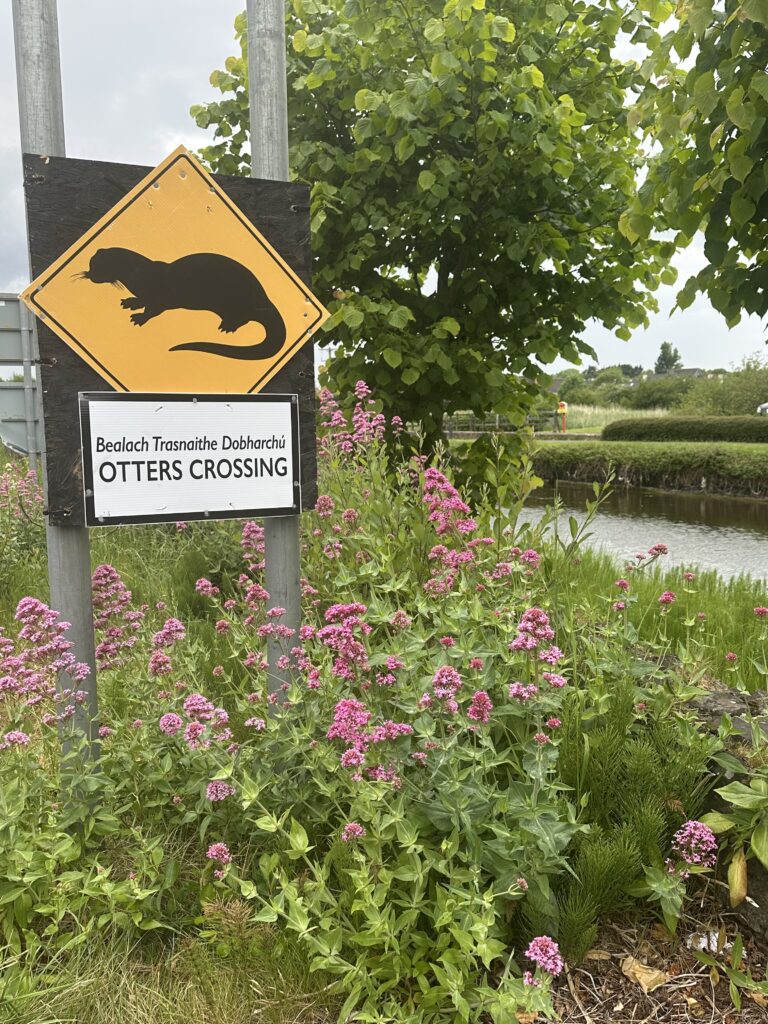
Wildlife was never far away. Swans moved gracefully through the water with their cygnets tucked close behind, and herons stood motionless among the reeds. We kept hoping to spot one of the area’s otters, especially after seeing the charming “Otters Crossing” signs. We never knew whether one might appear, and that possibility added a little magic to the walk.
As we continued, the white tower of Blennerville Windmill slowly came into view. Standing proudly against the sky, it looked like a piece of another century. We crossed the metal swing bridge into the village and soon found ourselves beneath one of Kerry’s best-known landmarks.
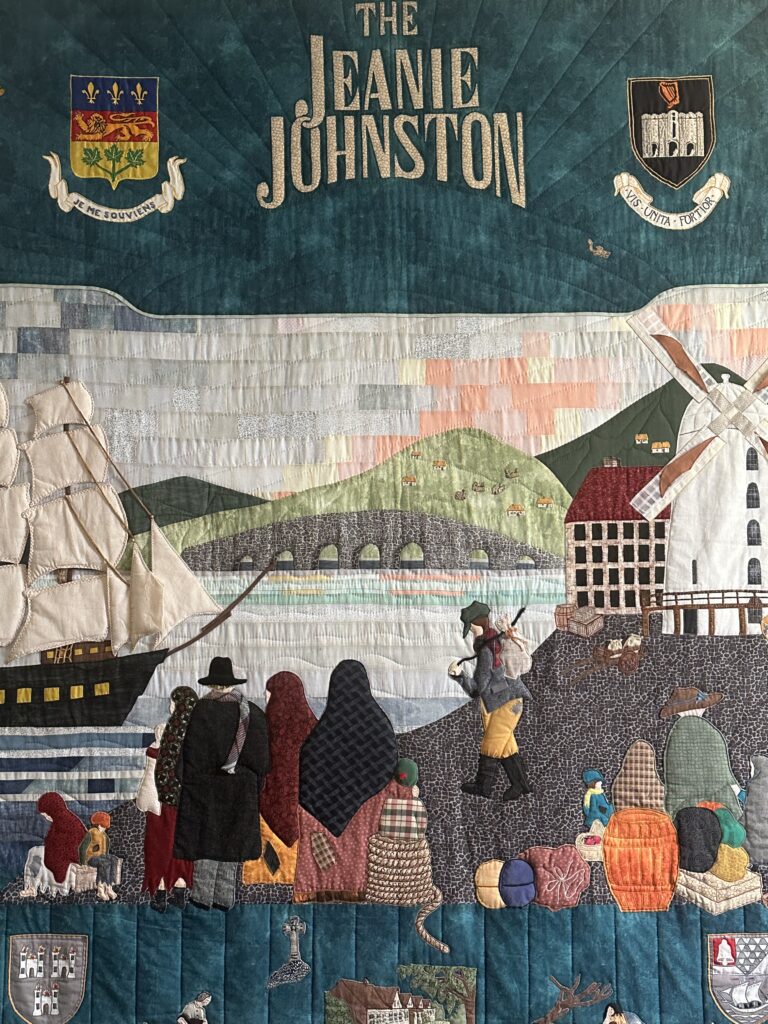
At 21.3 metres, Blennerville Windmill is the tallest working windmill in Ireland. Built around 1800, it once milled grain and played an important role in the economy of Tralee’s port. Blennerville also has a more sombre history. During the Great Famine, it became a major departure point for families leaving Kerry for North America in search of survival and a better life.
Today, the beautifully restored windmill is open to visitors, with traditional milling demonstrations, original machinery, and exhibitions telling the story of famine-era emigration from Kerry. Watching the enormous millstones turn offered a fascinating glimpse into the work and rhythms of life two centuries ago.
For the return journey, we followed a loop along Kearney’s Road, skirting the edge of Tralee Bay Nature Reserve. Marshland, reeds, and lily-covered water provided a rich habitat for birds and other wildlife. From there, the route climbed gently towards Healy’s Cross before winding down through the leafy lanes of Ballyard Hill and back towards town.
Although the walk is easy and family-friendly, it never feels uneventful. Between the wildlife, water, mountain views, and layers of local history, it has all the satisfaction of a proper adventure without being too demanding.
On a moody Kerry afternoon, with rain clouds gathering over the mountains and the canal reflecting the sky like glass, it was especially memorable.